
Dolby Atmos Music Mixing: A Practical Guide
A practical guide for producers, engineers, and studio owners who want to understand Dolby Atmos music mixing, room layouts, speaker choices, monitoring, calibration, workflow, and realistic ways to scale from a project studio to a professional immersive room.
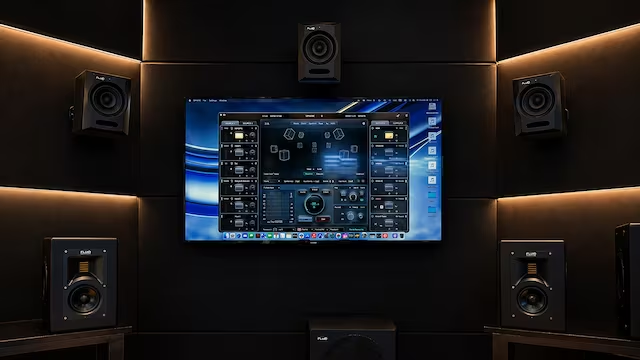
Three things matter before you add more speakers.
Atmos can create width, height, depth, and movement, but the record still has to work musically. Start with the mix, then use the immersive field with purpose.
Build the stereo foundation
The vocal, drums, bass, lead instruments, and core groove still need to work. Atmos should enhance the record, not distract from it.
Use space with intent
Background vocals, delays, reverbs, pads, effects, and transitions are often strong candidates for immersive placement.
Check translation
Check the speaker mix, binaural render, stereo downmix, and consumer playback when possible. Translation is the whole game.
What is Dolby Atmos music mixing?
Dolby Atmos lets you place audio around the listener in a three-dimensional sound field. Instead of working only from left to right, Atmos allows engineers to create depth, height, width, and movement beyond traditional stereo and surround.
In music, this can mean keeping the vocal focused in front while background vocals, reverbs, delays, synth layers, percussion, and effects move into a wider immersive space.
Beds
Traditional channels that create the foundation of the mix.
Objects
Individual sounds placed anywhere in 3D space with precision.
Metadata
Tells the renderer how to translate the mix to different playback systems.
Dolby Atmos on a budget.
A practical look at building an immersive monitoring system with Fluid Audio FX monitors. This is the useful entry point for smaller rooms, height channels, surround positions, and project studios that want real speaker-based Atmos monitoring without immediately moving into a premium reference system.
Why accurate monitoring matters even more in immersive rooms.
Headphones are useful for binaural checks, but a calibrated speaker system gives you a more reliable picture of placement, movement, low end, and real-world translation.
Placement
Accurate monitoring reveals depth, height, and side placement so you can make confident spatial decisions.
Translation
A strong Atmos mix must work across speakers, headphones, soundbars, cars, and consumer devices.
Low frequency control
Low end becomes even more important in immersive rooms. Good bass control leads to better mix decisions.
Start practical. Scale to reference monitoring when the room demands it.
Fluid Audio and Fluid Professional serve different parts of the same immersive workflow. The FX series makes speaker-based Atmos practical. Image Series is the higher-end reference path for rooms where critical translation, output, and system scale matter more.
FX50 v2 and FX80 v2
Coaxial monitoring is useful for compact immersive rooms because the high and mid frequency information originates from the same acoustic center. FX50 v2 and FX80 v2 are practical choices for smaller rooms, surrounds, heights, and cost-conscious 5.1.4 or 7.1.4 systems.
Image 1, Image 2, and 212S
Image Series is the professional reference path for demanding stereo and immersive rooms. Image 1 provides compact 3-way monitoring, Image 2 adds more scale and low-frequency authority, and 212S extends the system for serious bass and LFE work.
Choose the system that fits the room and workflow.
The right Atmos system is not automatically the most expensive one. Start with the room size, speaker count, listening distance, output needs, and how critical the work needs to be.
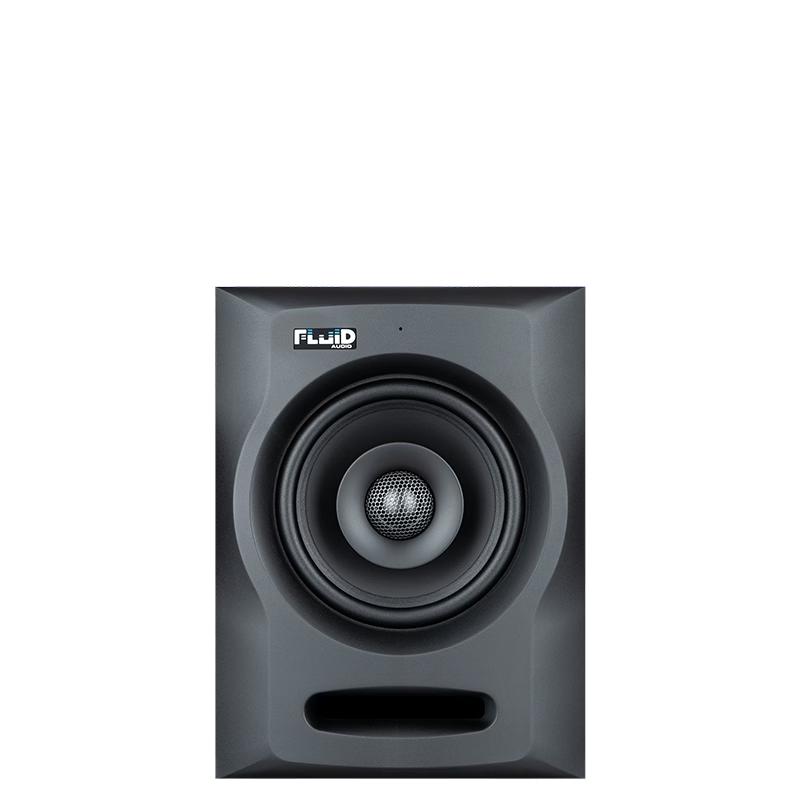
FX50 v2
Compact coaxial monitor for smaller rooms, height channels, surround positions, and project studio Atmos systems.
View FX50 v2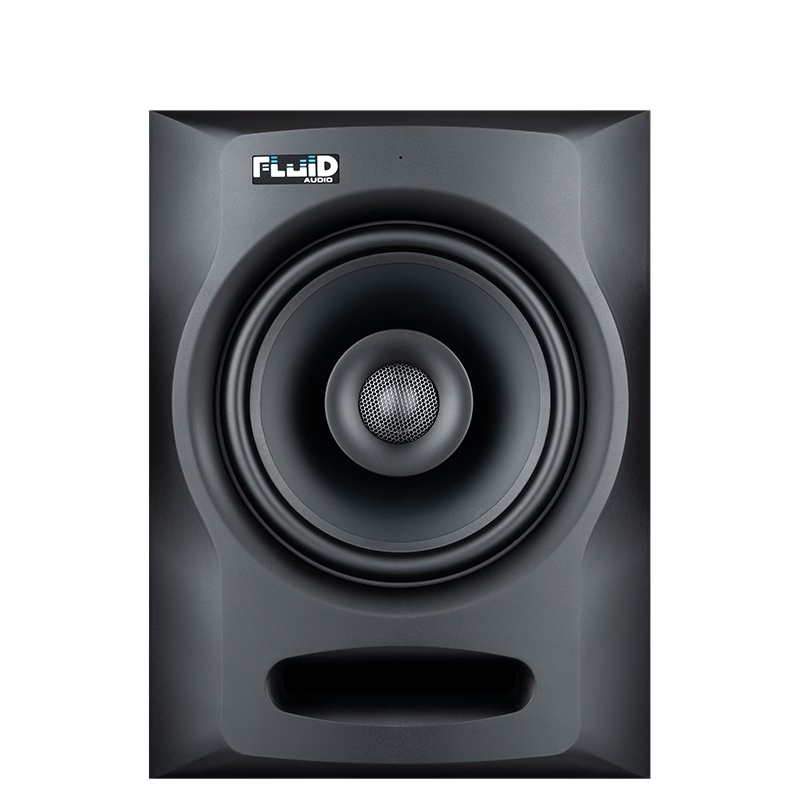
FX80 v2
Larger coaxial monitor with more output and low-end extension for serious project rooms and immersive setups.
View FX80 v2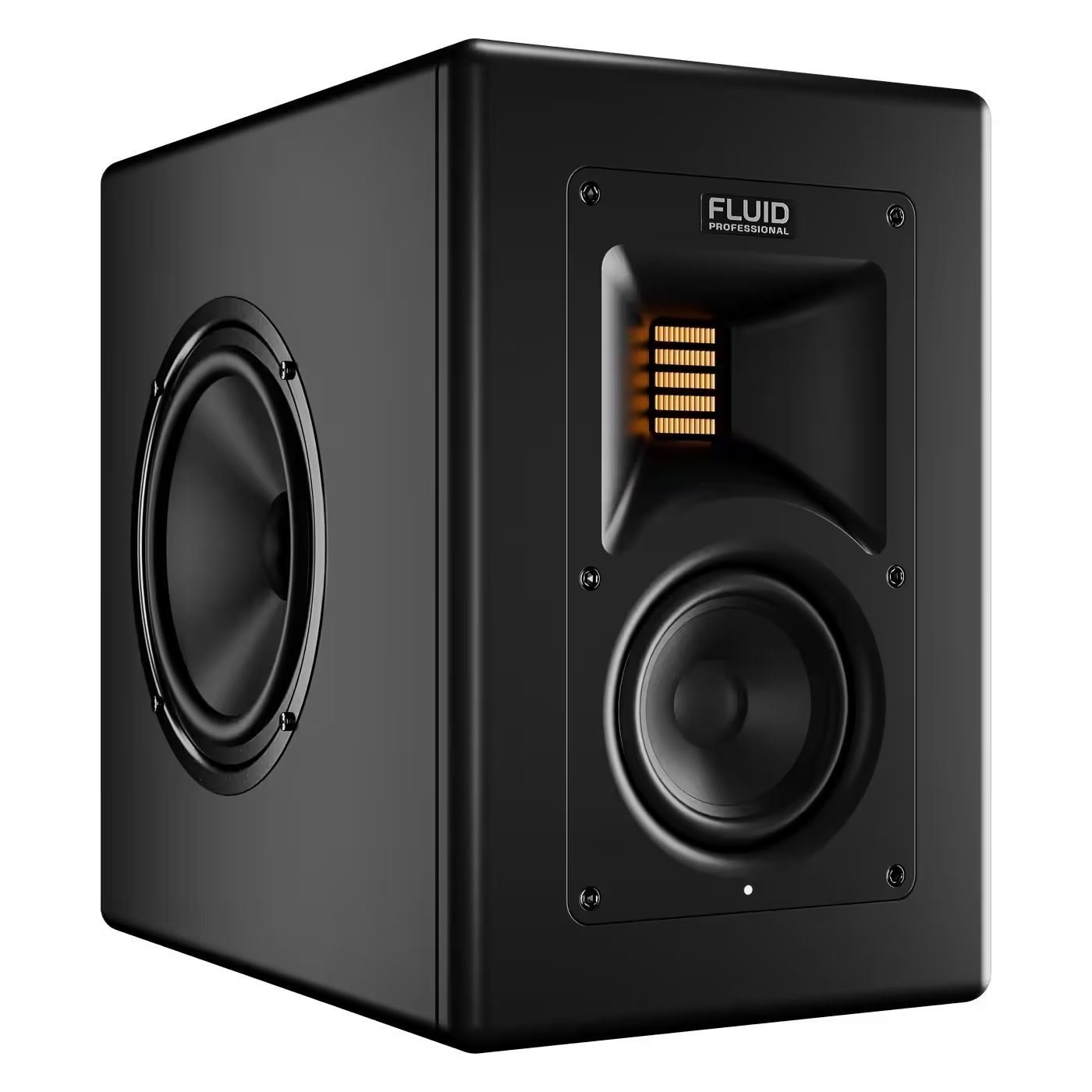
Image 1
Compact 3-way reference monitoring for high-end nearfield work and scalable professional immersive systems.
View Image 1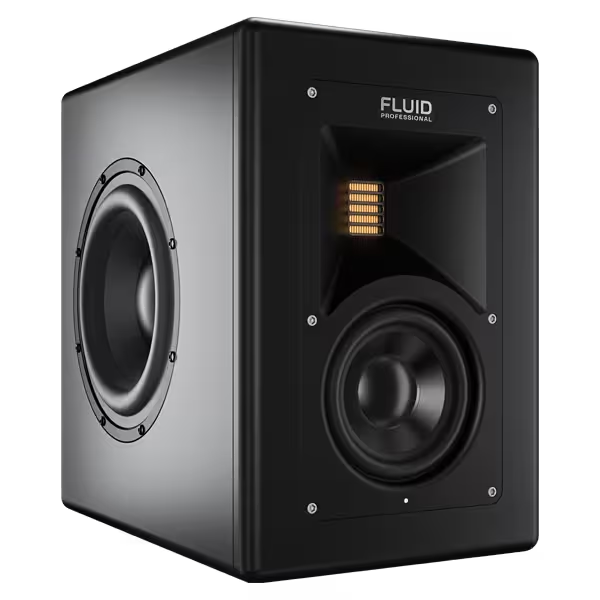
Image 2
Higher output, greater scale, and deeper authority for larger critical listening and immersive rooms.
View Image 2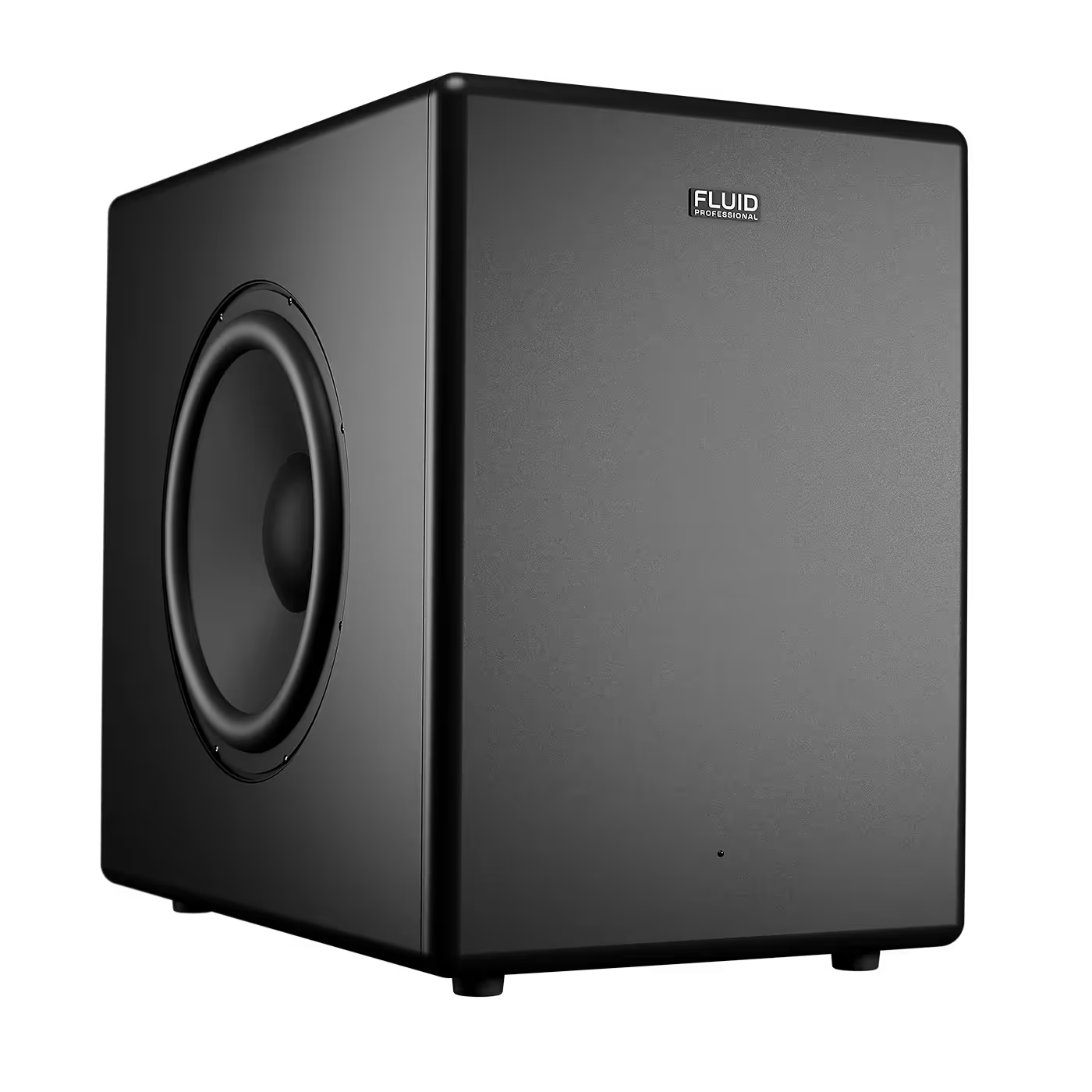
212S
Controlled low-frequency extension and LFE capability for professional stereo and immersive systems.
View 212SLayouts, budget, and the core gear you will need.
The speaker system is only part of the project. Routing, calibration, mounting, acoustics, and the renderer all matter if the room is going to support reliable Atmos decisions.
Common Atmos layouts
- 5.1.4: useful starting point for smaller rooms.
- 7.1.4: strong target for serious music mixing with more control and immersion.
- 9.1.6+: suited to larger professional rooms where coverage and translation are critical.
Realistic cost ranges
$1,000 to $3,000Headphone learning setup for workflow practice and binaural monitoring.
$5,000 to $10,000Project studio setup for 5.1.4 or compact 7.1.4 environments.
$15,000+Professional room for commercial music, film, and immersive production.
Core gear
- DAW with immersive support
- Dolby Atmos Renderer
- Audio interface with sufficient outputs
- Monitor control and calibration tools
- Speakers, subwoofers, and mounts
- Acoustic treatment and measurement
Why coaxial and 3-way designs solve different Atmos problems.
The point is not that one architecture is always better. The right design depends on placement, room scale, listening distance, output needs, and how deeply you need to judge the mix.
Why coaxial monitors make sense for immersive rooms
In immersive setups, speakers may be placed around, above, or slightly outside ideal stereo positions. Coaxial and point-source designs can help maintain focused imaging because high and mid frequency information originates from the same acoustic center.
That makes FX50 v2 and FX80 v2 practical options for compact Atmos rooms, height channels, surround positions, and project studios building toward 5.1.4 or 7.1.4.
Why 3-way monitoring matters in critical rooms
A well-designed 3-way monitor separates low, mid, and high frequency work so each driver can operate in a more controlled range. That can make vocals, guitars, snares, piano, synths, reverbs, and bass relationships easier to judge.
Image 1 and Image 2 are the professional path when deeper mix judgment, dedicated midrange reproduction, output, and translation confidence matter more than simply fitting more speakers into the room.
Common questions about building a Dolby Atmos music room.
The useful answer is usually determined by room size, monitoring distance, speaker count, output requirements, and whether the room is for learning, project work, or commercial reference monitoring.
Can I mix Dolby Atmos on a budget?
Yes. A compact speaker-based system can be a practical way to learn real immersive placement and calibration. FX50 v2 and FX80 v2 are positioned as the accessible Fluid Audio path for project rooms and compact multi-speaker systems.
Is 5.1.4 enough for music mixing?
5.1.4 can be a useful starting point in a smaller room. 7.1.4 gives more side and rear control, while larger professional rooms may use 9.1.6 or more channels.
Do all Atmos speakers need to be the same?
Matching speakers makes tonal consistency easier, but practical rooms may use different models for mains, surrounds, and heights. Calibration and coherent tonal behavior across the system become especially important when the models differ.
When should I move from FX monitors to Image Series?
Move toward Image Series when the room needs higher reference accuracy, greater output, dedicated 3-way midrange reproduction, deeper low-frequency authority, or a professional monitoring standard for commercial work.
Atmos is not just more speakers. It is better decisions in more dimensions.
Start with the room and workflow. Use Fluid Audio FX monitoring for a practical immersive system, or move into Fluid Professional Image Series when the room requires a higher reference standard.