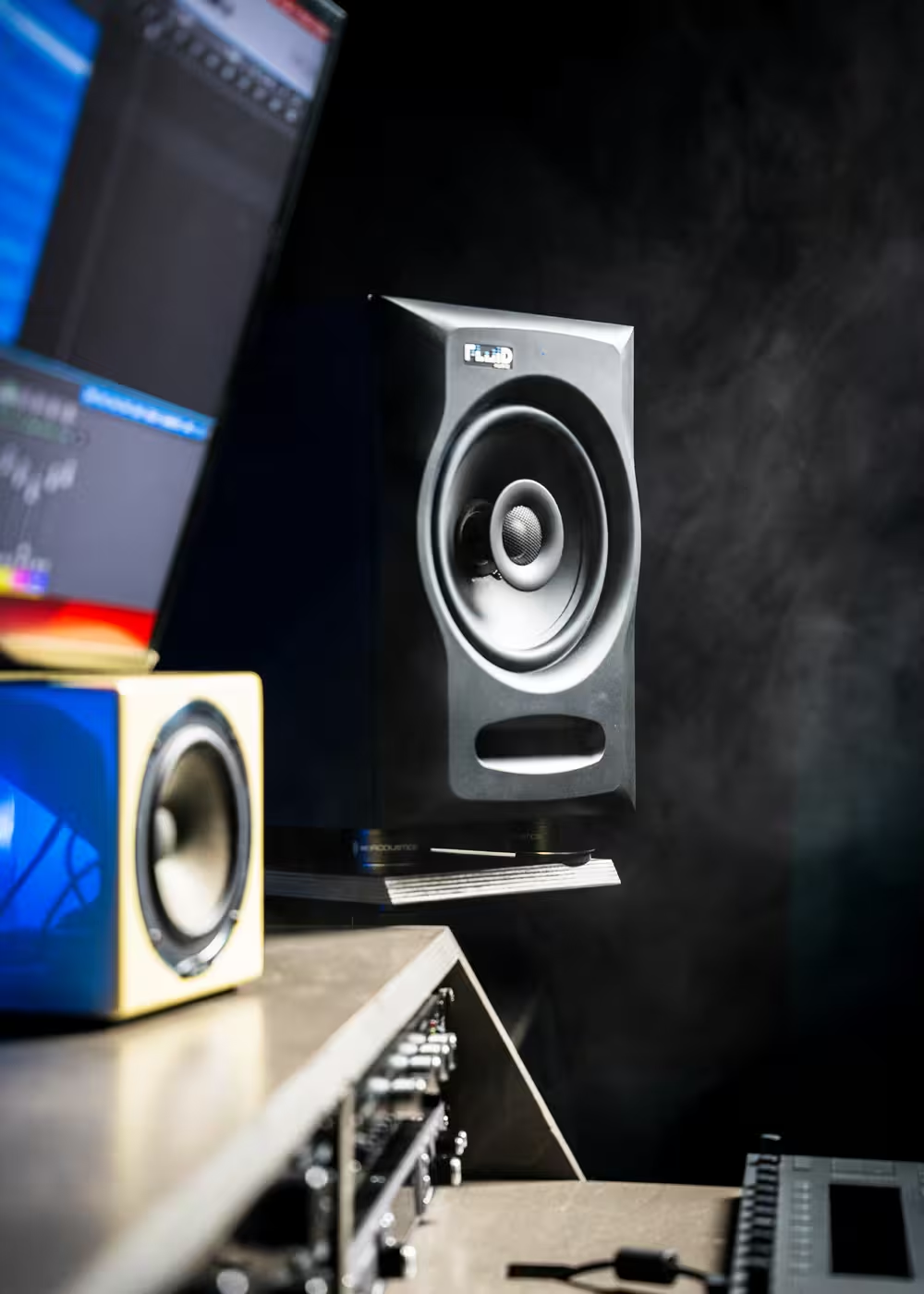
Balanced Desktop Monitors or Coaxial Imaging?
Choose C Series for clear, balanced desktop sound without an exaggerated bass or treble tilt. Choose FX when focused stereo imaging, front-to-back depth and a flexible coaxial form matter. See how C35BT and C50BT compare with PreSonus Eris, and how FX50 V2 and FX80 V2 compare with Yamaha HS, KRK ROKIT, ADAM T and Kali LP.
- Free US shipping
- 2-year warranty
- Live availability on product pages
Balanced desktop playback. Focused mix decisions.
C Series is for compact desks and flexible everyday setups: a clear, balanced presentation with controlled bass and detail, without an exaggerated bass or treble tilt. Bluetooth makes casual playback easy; balanced TRS, RCA and AUX keep wired sources simple. FX Series is for production decisions where stereo placement, image focus and depth matter. Its coaxial drivers share one acoustic axis, and the cabinet can be used upright or horizontally.
For critical work, connect your interface by wire and compare at matched listening levels. Bluetooth is handy for playback, but adds latency and is not the monitoring connection to use while recording.
Why choose C35BT or C50BT?
Choose C Series when you want one compact pair for wired work, Bluetooth playback and daily listening, with a balanced sound that avoids a deliberately hyped bass or bright top end. The choice between C35BT and C50BT is mainly footprint, bass extension and whether you want to add a subwoofer.
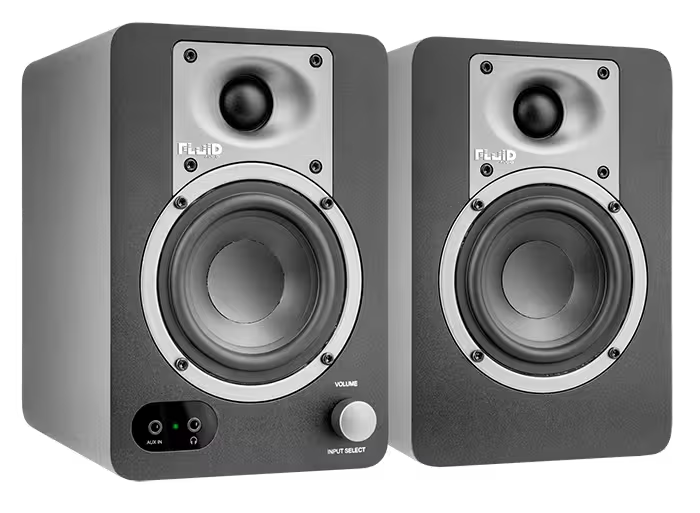
Eris 3.5BT Gen 2 vs C35BT
Both are 3.5-inch Bluetooth pairs with wired inputs. C35BT gives you a balanced, clear nearfield sound in a small footprint, with TRS, RCA and AUX alongside Bluetooth. Eris adds front headphone output and high/low acoustic tuning controls. Pick by sound and desk fit; choose Eris if those front-panel controls are useful.
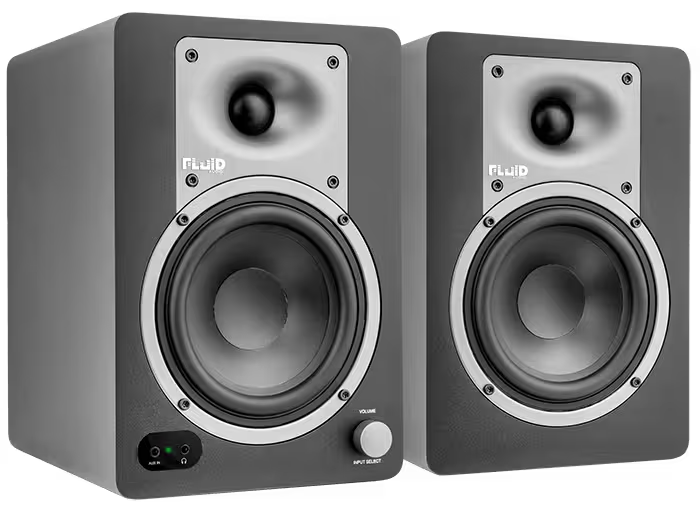
Eris 4.5BT Gen 2 vs C50BT
C50BT moves up to a 5.25-inch woofer, publishes 55 Hz low-frequency extension, and adds balanced subwoofer output for a 2.1 system. Eris 4.5BT is more compact and includes front headphone output plus high/low tuning controls. Choose C50BT for more speaker and subwoofer flexibility; choose Eris if the smaller cabinet and controls fit your desk better.
C Series prices are for a pair. Frequency-response figures are manufacturer specifications, not a substitute for hearing the monitors in your room. For tracking and timing-critical work, use the wired input.
Why compare FX coaxial monitors?
Yamaha HS, KRK ROKIT, ADAM T and Kali LP each bring useful controls or a distinct tweeter design. FX takes a different route: the tweeter sits on the woofer’s acoustic axis, creating a compact point-source layout aimed at coherent imaging and a more consistent tonal balance as you move around the listening window.
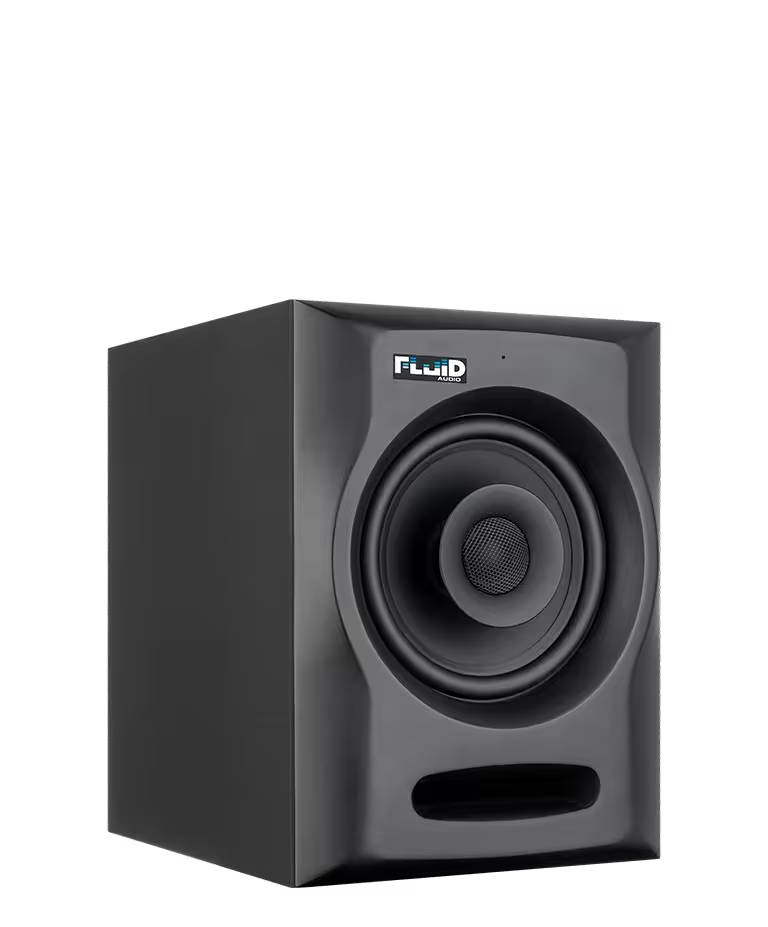
FX50 V2 vs five-inch alternatives
For compact nearfield work, FX50 V2 puts the tweeter on the woofer axis. That point-source geometry is designed for stable center imaging and clearer front-to-back depth, while letting you place the cabinet upright or horizontally.
Compare against: Yamaha HS5 (Room Control and High Trim), KRK ROKIT 5 G5 (three voicings and boundary EQ), and ADAM T5V (U-ART tweeter). The choice is their tuning options or tweeter approach versus the FX coaxial layout and flexible orientation.
FX80 V2 vs eight-inch alternatives
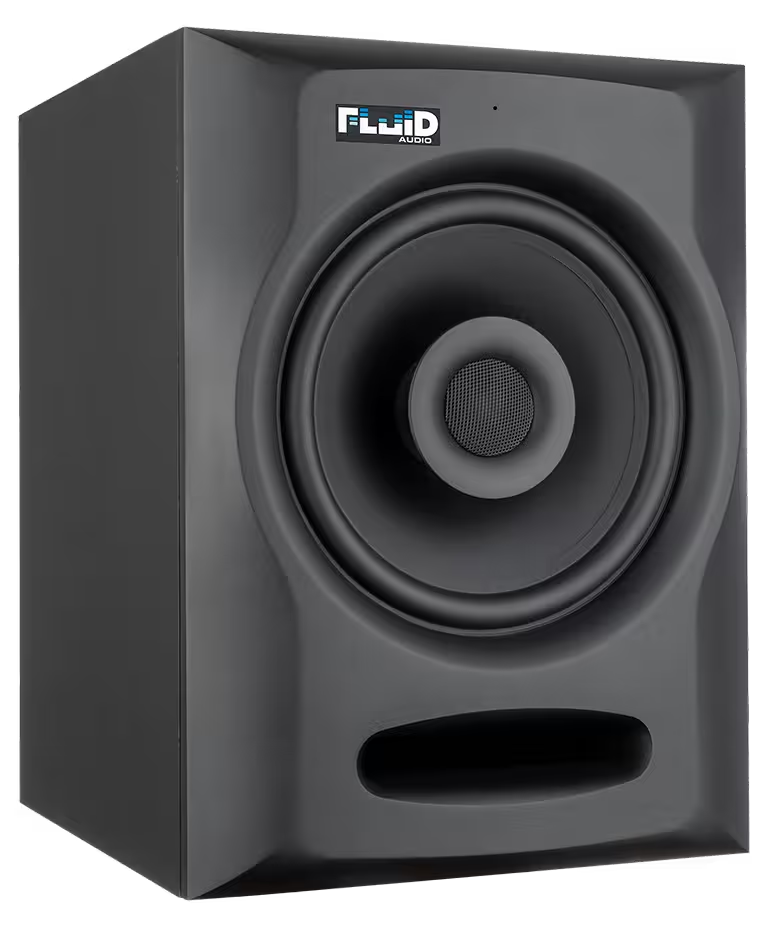
FX80 V2 brings the coaxial design to an 8-inch monitor. Its front-loaded port can help when placement is close to a wall; its shared acoustic axis is designed to keep image focus and front-to-back depth clear at the listening position.
Compare against: Yamaha HS8 (Room Control and High Trim), KRK ROKIT 8 G5 (three voicings and boundary EQ), ADAM T8V (U-ART tweeter), and Kali LP-8 (boundary EQ). Also consider the smaller Yamaha HS7 and ADAM T7V if you want an intermediate-size monitor. Compare their adjustment options with FX coaxial imaging, then check cabinet depth, listening distance and bass needs.
FX monitors are sold individually. Yamaha HS7, ADAM T7V and Kali LP-6 are intermediate-size options; compare output, room distance and cabinet footprint instead of treating woofer diameter as the whole decision.
A focused image, with less dependence on sitting exactly on-axis.
FX is still a two-way monitor: it has a woofer and a tweeter. The difference is their geometry. In a conventional two-way, the drivers are separated on the front panel. In FX, the tweeter is mounted in front of the woofer on the same acoustic axis. Around the crossover, that shared origin is designed to make the drivers behave more like one source.
Conventional two-way monitors can offer their own advantages, especially more extensive room and voicing controls. Coaxial is a design choice, not a guarantee of better sound in every room. Compare at matched levels, from your actual listening position, with familiar mixes.
Four models. Two different jobs.
| Fluid Audio model | Compare against | Design / connections | Direct US price | Two-speaker cost |
|---|---|---|---|---|
| C35BT | PreSonus Eris 3.5BT Gen 2 | 3.5-inch Bluetooth pair; balanced TRS, RCA, AUX | $139 per pair | $139 |
| C50BT | PreSonus Eris 4.5BT Gen 2 | 5.25-inch Bluetooth pair; balanced TRS, RCA, AUX; balanced sub out | $199 per pair | $199 |
| FX50 V2 | Yamaha HS5, KRK ROKIT 5, ADAM T5V | 5-inch coaxial; balanced XLR/TRS and RCA | $149 each | $298 — order two |
| FX80 V2 | Yamaha HS8, HS7; KRK ROKIT 8; ADAM T8V, T7V; Kali LP-8 | 8-inch coaxial; balanced XLR/TRS and RCA | $249 each | $498 — order two |
Questions to settle before you choose.
Is FX50 V2 a direct replacement for Yamaha HS5 or KRK ROKIT 5?
They are different monitor designs. Compare the exact models by room size, listening distance, placement, connection needs, response controls, and how the stereo pair is priced. FX50 V2’s defining design difference is its coaxial driver layout.
Why consider C35BT or C50BT against Eris Bluetooth speakers?
Both C Series systems include Bluetooth and two speakers in the box, while also offering wired inputs for desktop and home recording setups. C50BT adds a larger 5.25-inch woofer and balanced subwoofer output; C35BT is the more compact option.
Are FX monitors priced as pairs?
No. FX50 V2 is $149 per monitor and FX80 V2 is $249 per monitor. A stereo setup uses two monitors, so the current direct US prices are $298 and $498 respectively.
How should I compare a coaxial design with a traditional two-way monitor?
Compare the listening window, imaging, placement flexibility, room controls, and tonal balance in your own room. Coaxial describes where the drivers are positioned; it does not by itself establish which model is best for every listener or room.